Overview
What WAZI Does
WAZI is a due diligence and supply intelligence system for gold supply chains, with initial focus on Artisanal and Small-Scale Mining (ASM) contexts. It enables supply chain actors — refiners, aggregators, upstream operators, and downstream buyers — to evaluate sourcing opportunities, apply and document due diligence systematically, monitor supply chain risks over time, and generate credible reporting linked to discrete shipments and their upstream value chains.
WAZI is not a single-client compliance tool. It is infrastructure for responsible sourcing that multiple organisations can operate within and benefit from.
The Problem
ASM supply chains present distinctive structural and operational challenges:
Fragmentation and informal networks. ASM supply chains are geographically dispersed, typically fragmented across many small actors and informal handoff points, with sourcing opportunities emerging through personal networks rather than structured procurement.
Opacity and incomplete documentation. Ownership structures remain unclear, layered, or only partially documented. Supply provenance is difficult to establish. Individual actors possess information silos with limited cross-chain visibility.
Reactive, retrospective due diligence. DD is traditionally conducted after the fact, document-based, and narrative-heavy, relying on third-party auditors to interpret complex supply chain claims.
Absent feedback loops. Upstream ASM actors lack practical tools to communicate verifiable information about their operations, governance, and risk controls to international buyers.
Operationalisation gap. International standards (OECD Due Diligence Guidance, LBMA Responsible Gold Guidance) establish clear principles but are complex and abstract. Their translation into structured, repeatable processes at scale remains unresolved.
How WAZI Solves It
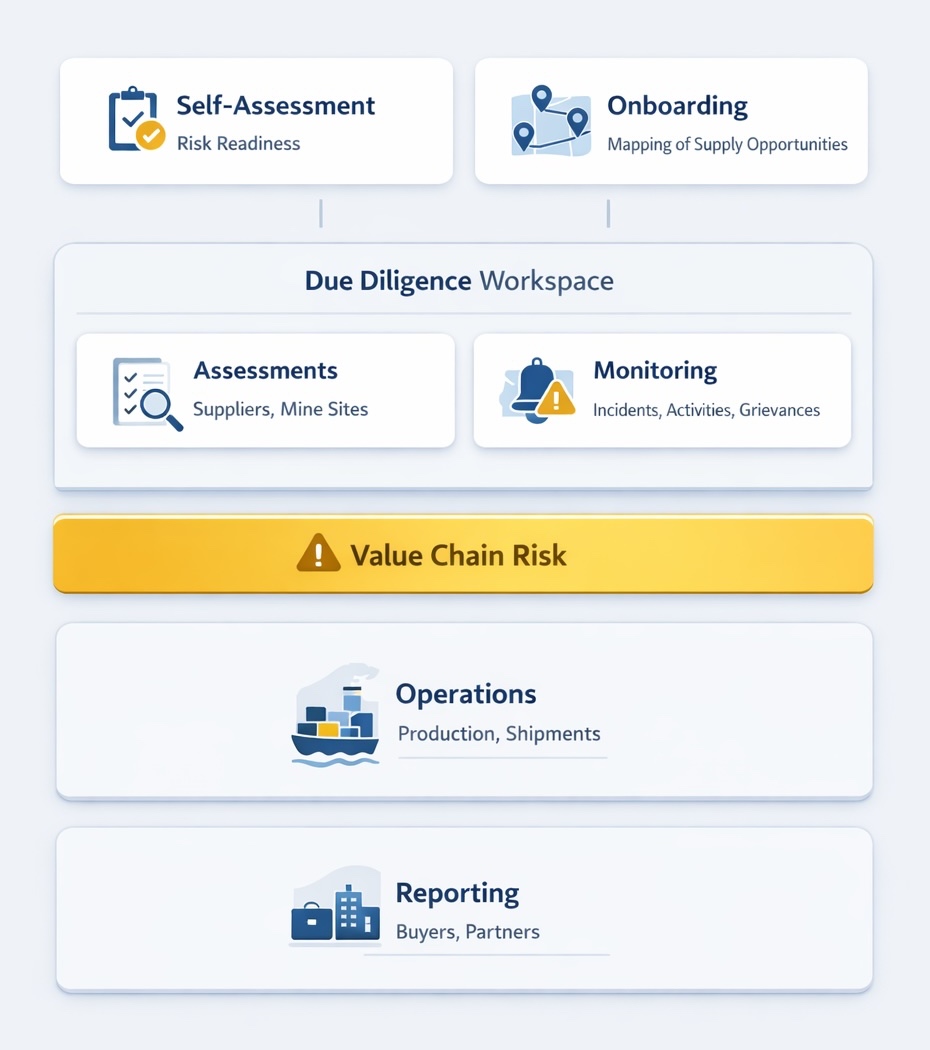
WAZI addresses these challenges through five core practices:
-
Guided self-assessment — translates complex international standards into structured, form-based assessments that upstream operators can complete directly.
-
Streamlined partner onboarding — captures supply chain topology before engagement begins, mapping counterparties, beneficiaries, mining units, and entry points systematically.
-
Transparent and modular assessment methodologies — implements standardised DD assessment processes with explicit, demonstrable outcomes rather than narrative conclusions.
-
Continuous monitoring and documentation — records incidents, activities, and testimonials as structured events linked to locations and stakeholders, embedded in ongoing operations.
-
Shipment-centric reporting — links discrete sourcing transactions to documented upstream supply profiles and their cumulative DD history.
Who WAZI Serves
WAZI can serve a range of supply chain actors:
- Aggregators and exporters managing sourcing relationships
- Miner cooperatives coordinating member operations
- Refiners and traders needing supply chain visibility
- Industry programmes such as certification schemes and development initiatives
- Development agencies and civil society monitoring programmes
The system creates network effects: as more actors document their supply chains within WAZI, upstream operators accumulate verifiable profiles, downstream buyers gain richer visibility, and system-wide risk intelligence deepens.